
Tires Matched to Vehicle, Use, and Budget
Tire sales and installation in Lakewood for cars, trucks, ATVs, and side-by-sides across all major brands and sizes
The right tire is determined by the vehicle it goes on, how that vehicle is used, and what the owner is willing to spend—not by brand loyalty or whatever is on sale this week. Whatever It Takes Automotive in Lakewood carries all tire brands and sizes for passenger cars, trucks, ATVs, and side-by-sides, and the approach is straightforward: you provide the vehicle and the budget, and the shop shows you what fits both. Brands in stock include Michelin, Goodyear, Bridgestone, Firestone, BF Goodrich, Continental, and others across the full price range.
Once a tire is selected, Whatever It Takes Automotive mounts and balances it on-site, and old tires are disposed of as part of the service. Mounting and balancing together matters because a tire that is improperly balanced produces steering wheel vibration at highway speed and accelerates wear unevenly across the tread—getting both done at the same time on calibrated equipment eliminates that problem from the start. The vehicle leaves ready to drive without a return visit needed to address a vibration that should have been resolved before it left.
Request a tire quote by vehicle make, model, and size to see what's available at the price point you're working with.
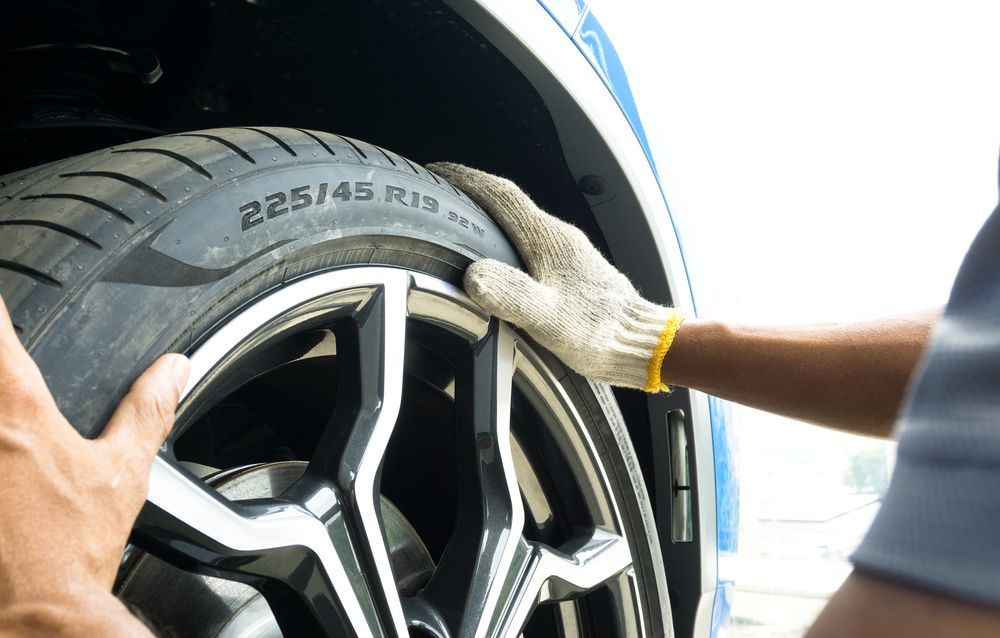
What Tire Selection Actually Accomplishes
Selecting between tire brands and lines involves evaluating tread pattern, load rating, speed rating, and tread life warranty—four factors that shift meaningfully between a budget-tier tire and a premium one at roughly double the price. Whatever It Takes Automotive walks through those differences for the specific vehicle and use case rather than defaulting to the most expensive option. A truck used primarily on gravel roads around rural Palmerton properties has different tread and sidewall requirements than the same truck used for commuting on Route 209—the selection should reflect that difference.
After installation, the change is immediate: ride quality improves when tires were worn below their minimum tread depth, straight-line tracking stabilizes when a previous tire was failing or unevenly worn, and steering response sharpens when the old set had lost structural integrity. For ATVs and side-by-sides, new tires restore traction in the terrain they were designed for rather than requiring the operator to compensate for a tire that has worn smooth.
Whatever It Takes Auto carries multiple lines within each brand, which means the selection isn't limited to a single tier—if a mid-grade tire in one brand performs comparably to a premium tier in another at a lower price point for the vehicle type in question, that comparison is part of how the shop approaches the decision. Free estimates are available on all tire work before anything is purchased.

Answers About How the Tire Work Is Done
The questions below address the tire selection and installation process specifically—what happens during mounting and balancing, how brand and line differences affect the decision, and what you'll notice after installation is complete.
What is the difference between mounting and balancing, and why does both need to happen at installation?
Mounting seats the tire on the rim and inflates it to operating pressure; balancing measures the weight distribution of the mounted tire and adds counterweights where needed—skipping balancing leaves uneven weight that causes vibration at speed and shortens the tire's usable life.
How do load rating and speed rating affect which tire fits a specific vehicle?
Load rating indicates the maximum weight a tire can safely carry at rated inflation pressure; speed rating indicates the sustained speed the tire is designed for—both must meet or exceed the vehicle manufacturer's minimum specifications, which is a fixed constraint before brand or price is even considered.
What causes a tire to wear unevenly, and does it matter which position it came from?
Uneven wear is almost always caused by alignment issues, improper inflation, or a suspension component that has failed and is placing abnormal load on one part of the tread—replacing the tire without addressing the underlying cause will produce the same wear pattern on the new tire.
Why do ATV and side-by-side tires require different selection criteria than passenger tires?
ATV and side-by-side tires are rated for the terrain type they're designed to handle—aggressive tread for loose or muddy ground, harder compound for hardpack or gravel—and the sidewall construction differs from passenger tires because the loads and impact patterns are fundamentally different.
How do you determine which tread pattern is appropriate for the way a truck is actually used?
A highway-terrain tread prioritizes smooth highway ride and tread life; a mud-terrain tread prioritizes off-road grip at the cost of road noise and faster highway wear—most trucks used around rural Lakewood fall somewhere between the two, which is where all-terrain tires cover the most use cases without major compromises in either direction.
Whatever It Takes Automotive provides free estimates on all tire purchases and installation, and the shop stocks enough brands and sizes to match most vehicles without ordering delays. Whatever It Takes Auto also
sells and installs tires in Starlight, Chestnuthill, Palmerton, Weatherly, and Lehighton. Call (570) 798-3990 to find out what's available for your vehicle and budget before making a decision.